What Is Exomind and How Is It Different from Traditional TMS? A Chiropractor Explains
What is Exomind? It is a next-generation TMS system from BTL that delivers transcranial magnetic stimulation differently than older devices. Dr. Jamie Brimm, D.C. compares Exomind and traditional TMS, who it helps, and what a session feels like at ProActive in Tampa, FL.
Medically reviewed by Dr. Jamie Brimm, D.C., founder of ProActive Chiropractic and Wellness Center in Tampa, FL. Last reviewed May 2026.
Why Patients Are Asking About Exomind Right Now
Over the last two years, more patients have started asking, what is Exomind, and is it really different from the TMS therapy I have read about? It is a fair question. Transcranial magnetic stimulation (TMS) has moved from a niche psychiatric tool into mainstream awareness, and a new generation of devices like Exomind from BTL is starting to show up outside traditional psychiatric clinics. Patients searching transcranial magnetic stimulation near me or tms therapy near me are running into Exomind, and they want to know how the two compare before they book a consultation.
At ProActive Chiropractic and Wellness Center in Tampa, FL, I see this question almost every week. Many of my patients arrive after months or years of trying medications, talk therapy, sleep hygiene apps and lifestyle changes for depression, anxiety and brain fog. They want something non-drug, non-invasive and based on real neuroscience. That is exactly the conversation Exomind opens up.
This article is a plain-English answer to the question, what is Exomind, and how is it different from the traditional TMS therapy most people read about online. I will walk through the science behind TMS, what makes Exomind a next-generation system, and how the two compare on technology, comfort, protocol and care setting.
Part 1: What Is Traditional TMS Therapy?
How Transcranial Magnetic Stimulation Works
Traditional TMS, short for transcranial magnetic stimulation, uses a magnetic coil placed against the scalp to deliver focused magnetic pulses into specific regions of the brain. Those pulses pass painlessly through the skull and create small electrical currents in the targeted brain tissue, gently nudging underactive neural circuits back toward normal activity. The most common target is the left dorsolateral prefrontal cortex, an area that tends to be underactive in patients with major depression.
According to the National Institute of Mental Health, depression is one of the most common mental health conditions in the United States, and a meaningful portion of patients do not respond fully to medication. TMS was developed as a non-drug option for exactly those patients, and a growing body of PubMed research supports its use for treatment-resistant depression and related conditions.
FDA Clearance and Conditions Traditional TMS Treats
The FDA first cleared TMS for treatment-resistant major depressive disorder in 2008. Since then, FDA clearances have expanded to include obsessive-compulsive disorder, anxious depression, and smoking cessation. Off-label, providers also use TMS to support patients with anxiety, post-traumatic stress symptoms, and cognitive complaints often called brain fog. Search trends like tms for anxiety and tms for depression show just how mainstream the modality has become.
What a Traditional TMS Session Looks Like
A typical traditional TMS session takes 19 to 40 minutes. You sit in a reclining chair while a technician positions a figure-eight coil over a precisely mapped point on your scalp. The device delivers pulses in trains, with short rest periods between trains. Most patients describe the sensation as a steady tapping on the head, sometimes with mild scalp discomfort during the first few sessions that fades as the scalp adapts.
Typical Traditional TMS Protocol
The standard protocol is intensive. Most TMS programs run five sessions per week for four to six weeks, followed by a tapering phase. That can add up to 30 to 36 sessions in the office. Adherence is one of the biggest challenges of traditional TMS, which is one of the reasons newer devices like Exomind aim to deliver comparable benefits in shorter, more comfortable sessions.
Part 2: What Is Exomind?
Exomind as a Next-Generation TMS System
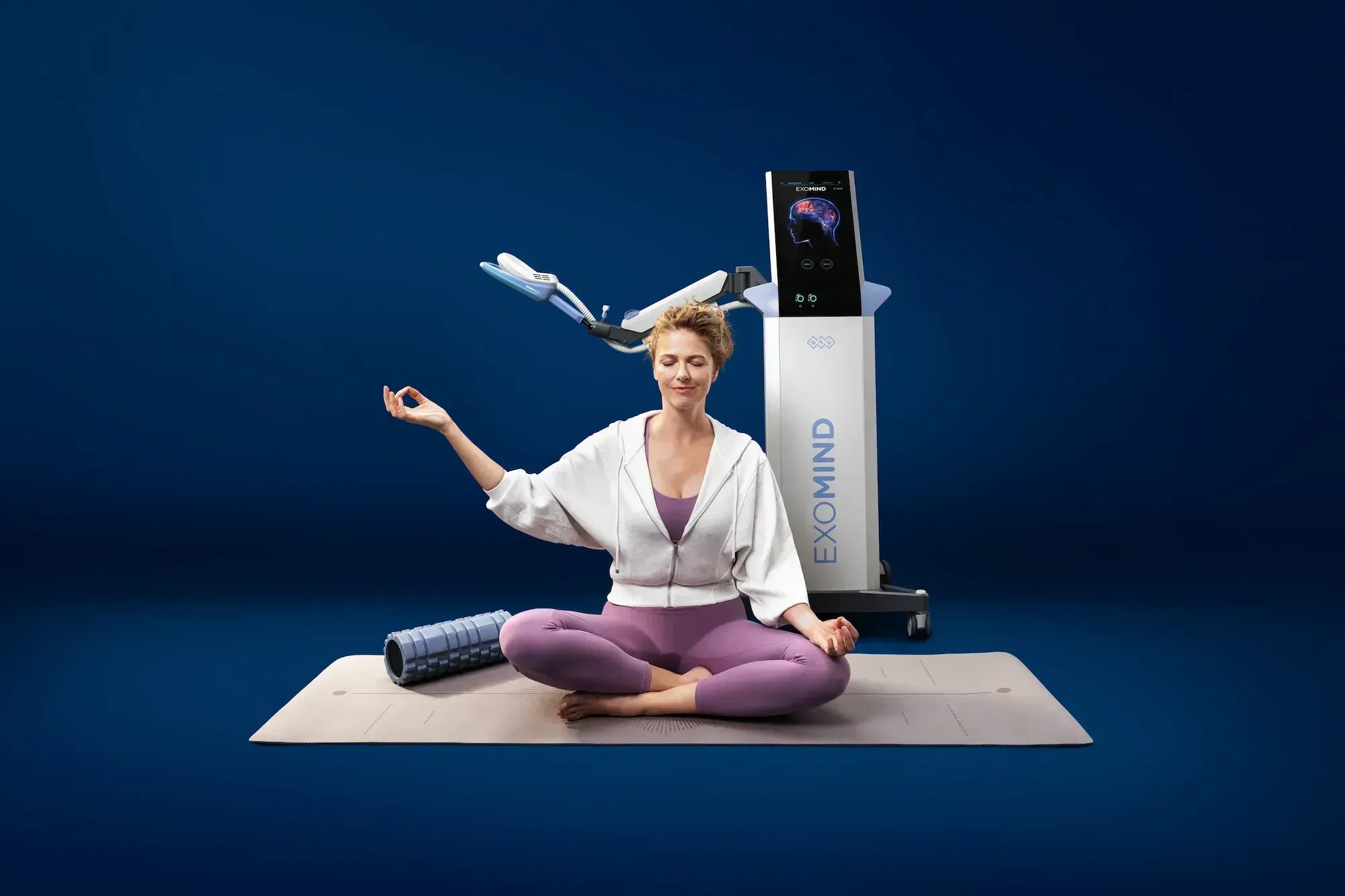
So, what is Exomind? Exomind is a next-generation, FDA-cleared TMS device developed by BTL Aesthetics, the same medical-device company behind well-known wellness technologies like Emtone. Like traditional TMS, Exomind uses a magnetic coil to deliver targeted pulses to mood- and cognition-related brain regions. Unlike older systems, Exomind is engineered around comfort, shorter sessions and integration into wellness practices rather than purely clinical psychiatric settings.
How Exomind Delivers Magnetic Stimulation Differently
The Exomind device uses a refined coil geometry and a streamlined session protocol intended to deliver the therapeutic dose of magnetic stimulation patients need in roughly half the time of many traditional protocols. The pulse pattern is designed to feel less sharp on the scalp, which is one of the most common reasons patients abandon older TMS programs in the first week.
BTL also designed Exomind to work alongside other wellness modalities. In a practice like ours, that means it can be scheduled in the same visit window as chiropractic care or other wellness sessions, which is especially helpful for patients who are managing chronic stress, poor posture and mental fatigue at the same time.
The Exomind Protocol at ProActive Chiropractic and Wellness Center
At ProActive in Tampa, FL, every Exomind program starts with a 30 to 45 minute consultation. I review your medical history, current medications, mental health history, and any prior TMS or ketamine treatments. We then map the standard target areas and design a session schedule that fits your life, often 15 to 20 minute appointments several times per week over a few weeks. You can learn more about the full clinical program on our TMS therapy with Exomind at ProActive Chiropractic in Tampa page.
What Conditions Exomind Addresses
Exomind is most commonly used to support patients with depression, anxiety, brain fog and cognitive fatigue. Many of our Tampa patients come in looking for help with sleep, motivation, focus and emotional regulation. Exomind is not a cure or a guarantee, but clinical research on TMS in general continues to grow, and patients often describe meaningful improvements in mood, energy and mental clarity when sessions are completed as prescribed.
Part 3: Exomind vs Traditional TMS, the Key Differences
Technology and Device Differences
Both Exomind and traditional TMS rely on the same core science, focused magnetic pulses that influence neural activity in mood- and cognition-related brain regions. The difference is in execution. Exomind uses BTL's updated coil and pulse system, which is engineered for faster set-up, more comfortable sessions and a streamlined protocol that fits within a wellness visit.
Session Experience: Comfort, Duration and What Patients Feel
Traditional TMS sessions can run close to 40 minutes and sometimes feel sharp on the scalp during the first few visits. Exomind sessions are typically shorter, often in the 15 to 20 minute range, and most patients describe the sensation as a steady tapping that is well-tolerated from the very first session. Shorter, more comfortable sessions tend to translate into better adherence, which matters because TMS only works when patients complete the protocol.
Customization and Protocol Flexibility
Exomind is designed to fit into a broader wellness care plan rather than a standalone psychiatric protocol. That means we can flex session timing, combine visits with chiropractic adjustments or movement therapy, and adjust intensity based on how you respond. Traditional TMS protocols tend to be more rigid and tied to a single clinical model.
Availability: Wellness Setting vs Clinical Psychiatry
Traditional TMS is most often delivered in psychiatric clinics or specialty TMS centers. Exomind is built to be offered in integrative wellness practices like ProActive, where it sits alongside chiropractic care, movement therapy and other restorative modalities. For many patients, that environment feels less clinical and more like a wellness investment.
The Integrative Approach
Mental wellness rarely lives in isolation from the body. Posture, chronic pain, sleep, and nervous system regulation all influence mood and cognition. At ProActive, Exomind is one piece of a broader integrative plan that may also include chiropractic care and soft tissue therapy. You can browse the full menu of wellness services at ProActive Chiropractic to see how the pieces fit together.
Is Exomind Right for You?
Who Is a Good Candidate for Exomind
Exomind is most often a good fit for adults who are dealing with persistent low mood, anxiety, mental fatigue or brain fog, especially if medications, therapy or lifestyle changes have only taken them part of the way. Patients who want a non-drug, non-invasive option to add to their existing care plan are typically strong candidates. As with any TMS device, certain implants and a personal or family history of seizures are screened carefully at consultation.
What to Expect at a Consultation at ProActive
If you search exomind near me or tms therapy near me in Tampa, an Exomind consultation at ProActive starts with a long, calm conversation. I want to understand your mental health history, current treatments, lifestyle and goals. We map the target areas, review safety considerations, and walk you through what a typical session feels like. You leave with a clear protocol, an honest expectation of timing and cost, and answers to every question you came in with.
How to Get Started in Tampa, FL
When you are ready, you can book your Exomind consultation at ProActive Chiropractic and Wellness Center directly. Our Tampa team will help you find an appointment time that fits your week and confirm everything you need to know before your first visit.
Frequently Asked Questions About Exomind
What is Exomind?
Exomind is a next-generation, FDA-cleared TMS device from BTL that uses focused magnetic pulses to support brain regions involved in mood, anxiety and cognitive function. It is delivered in short, in-office sessions and is most often used for depression, anxiety and brain fog.
How is Exomind different from traditional TMS?
Exomind uses the same core TMS science as traditional devices, but with an updated coil design, more comfortable session experience, shorter typical session length, and a protocol designed to fit into integrative wellness care rather than a standalone psychiatric model.
What is Exomind therapy used for?
Exomind therapy is most commonly used to support patients with depression, anxiety, brain fog and cognitive fatigue. Some patients also use it to support mental clarity and focus when prior treatments have not fully resolved their symptoms.
Does Exomind therapy really work?
Clinical research on TMS as a category continues to grow, and many patients report meaningful improvements in mood, motivation and focus. Results vary, and Exomind is not a cure. The honest answer is that it works best when patients complete the prescribed protocol and combine it with healthy sleep, nutrition and care for the whole body.
How much does Exomind therapy cost?
Exomind cost varies based on the number of sessions, the protocol and any combined wellness care. At ProActive in Tampa, FL, we share a personalized quote at consultation. Many patients use CareCredit or package pricing to make their plan more accessible.
How many Exomind sessions do I need?
Most Exomind programs run for a few weeks of frequent, short sessions, followed by a lighter maintenance phase. The exact number depends on your goals, baseline and response. Your protocol is mapped at consultation, not promised in advance.
Is Exomind covered by insurance?
Coverage for newer TMS devices is still evolving and depends on the carrier, diagnosis and plan. At your consultation we walk through what is realistic for your situation and explain the payment options ProActive supports.
Can Exomind help with anxiety?
Many of our Tampa patients explore Exomind because of anxiety as much as depression. TMS in general has growing evidence behind it for anxiety symptoms, and patients often report feeling less reactive, more focused and better able to sleep as their protocol progresses.
What does Exomind feel like during a session?
Most patients describe Exomind as a steady tapping sensation on the scalp, with no need for sedation and no downtime afterward. You can drive home, return to work and continue your day normally.
Can I combine Exomind with chiropractic care?
Yes. ProActive is built around integrative care, and Exomind pairs well with chiropractic adjustments, soft tissue therapy and core support. Many patients schedule a chiropractic visit on the same day as their Exomind session for efficient, whole-body care.
Ready to Learn More?
If you have been searching exomind near me or wondering what is Exomind and whether it could finally help, the next step is a real conversation. Book your Exomind consultation at ProActive Chiropractic and Wellness Center in Tampa, FL, and we will design a plan that fits your goals, your schedule and your full picture of health.
This article is for educational purposes only and does not constitute medical advice. Always consult a qualified healthcare provider about your specific situation.